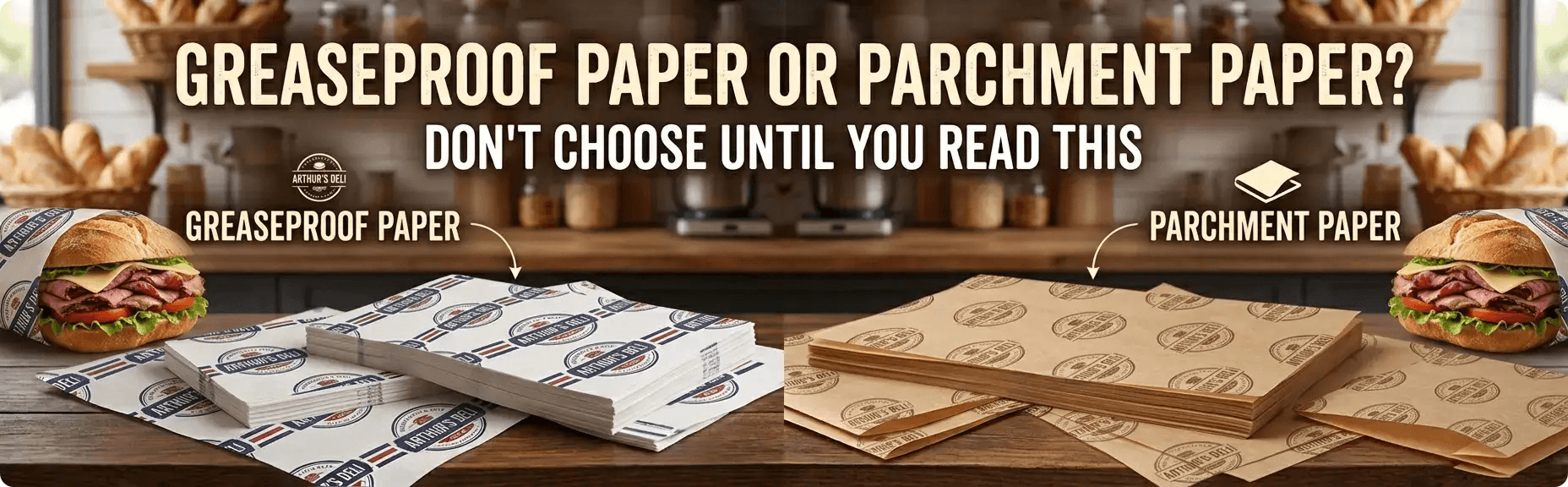
Greaseproof Paper or Parchment Paper? Don’t Choose Until You Read This
July 26, 2026 Uncategorized
It is important to understand different types of food paper to choose the best based on your requirements. The paper that comes into direct contact with the food affects the presentation as well as the operational efficiency. Among the most compared materials, greaseproof paper vs parchment paper is one of the common comparisons due to all the good reasons. These two appear similar, but are manufactured for different applications and offer distinct performances.
If you are running a food service business, the use of the wrong paper can lead to grease leaks, soggy products, poor presentation, and higher packaging costs, reduce customer satisfaction, or you may even end up burning the food. When you will understand the difference between grease and parchment paper, you will be able to choose the most suitable option for your operation requirement. That is why Greaseproof Papers is once again available to make you understand all the differences these two common food papers have.
You will learn the manufacturing process, material properties, performance characteristics, food safety considerations, sustainability, and commercial applications of both papers to help you make an informed purchasing decision.
What Is Food Contact Paper
Food contact paper is the one that is manufactured specifically for direct contact with food items. Online ordinary paper, a food-grade paper, is manufactured under strict quality controls. This is done to ensure that teh paper does not transfer harmful substances, odors, and contaminantsto the food. Based on the intended purpose or application, there are multiple features that a food wrapping paper must have. Such as:
- Grease resistance
- Moisture control
- Heat resistance
- Non-stick performance
- Printability
- Food safety compliance
- Sustainable disposal
Greaseproof paper and parchment paper have these qualities, but are acquired due to different manufacturing methods. This makes each of them suitable for a specific food application.
What Is Greaseproof Paper?
Greaseproof paper is dense paper that is manufactured to resist oil and fat penetration. By using this paper, you will not have to rely on heavy surface coatings. During production, cellulose fibers are extensively refined until they become tightly bound. This significantly reduces the paper porosity.
Because the fibers are compressed so closely together, grease molecules cannot easily penetrate the sheet. Grease-resistant paper is not like ordinary paper. Its grease resistance is due to a high level of fiber structure and not due to chemical barriers or coatings. The exact performance and features of the paper depend on the fiber quality, refining process, basis weight, and fining enhancement used by the manufacturer. Some of the technical characteristics of this paper are as follows:
| Property | Typical Range |
|---|---|
| Material | Refined Cellulose Fiber |
| GSM | 28–60 GSM |
| Grease Resistance | High |
| Air Permeability | Moderate |
| Food Contact | Yes |
| Printability | Excellent |
| Folding Strength | High |
| Moisture Resistance | Moderate |
What Is Parchment Paper?
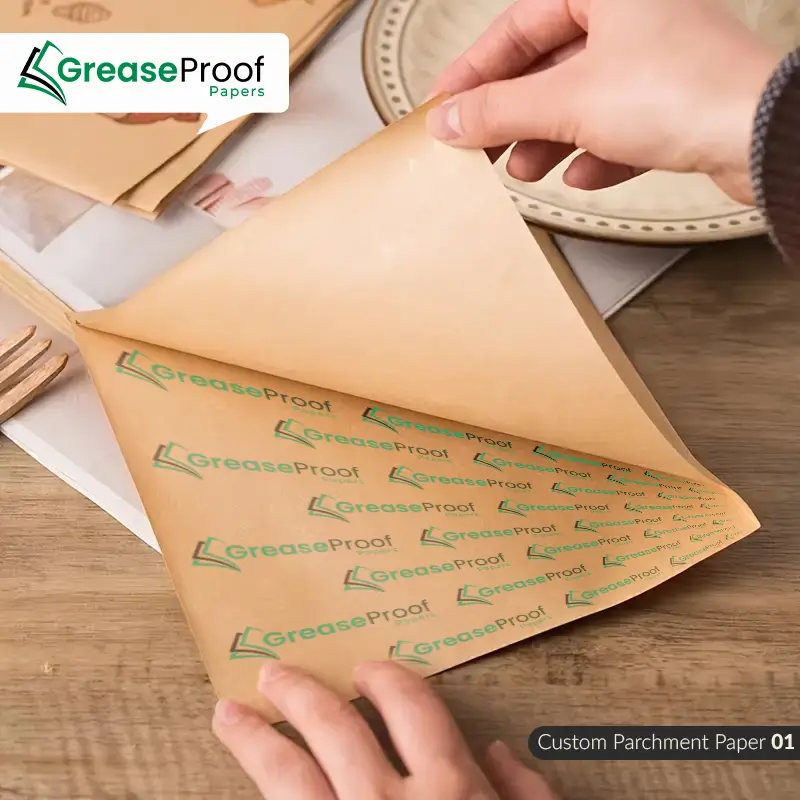
Parchment paper also has a cellulose base, but it undergoes an additional processing that increases its heat resistance and makes it non-stick in nature. At the commercial level, parchment wrapping sheets are treated with silicone coatings that give them the following features:
- Excellent release properties
- High temperature stability
- Moisture resistance
- Non-stick performance
Due to the application of silicone coating on parchment, it becomes ideal for baking and other applications where food must be released easily from trays or pans. Make sure you are following the temperature limit set by the manufacturer. This is because teh paper’s features vary based on the paper grade. Parchment has teh following distinct features:
| Property | Typical Range |
|---|---|
| Material | Cellulose Paper |
| Surface | Silicone Coated |
| Oven Resistance | Up to approximately 220–230°C (varies by manufacturer) |
| Grease Resistance | Excellent |
| Non-Stick Performance | Excellent |
| Food Contact | Yes |
| Printability | Limited |
Core Differences of Parchment and Greaseproof Paper
There are several factors present in both papers that make them different from each other. Manufacturing, performance, heat resistance, breathability, print quality, and general use are all different between the two. Let’s read them one by one:
Greaseproof Paper Manufacturing
Its manufacturing process gives a dense fiber network that naturally improves grease resistance without requiring heavy coatings. The manufacturing process generally includes:
- High-quality virgin pulp selection
- Intensive fiber refining
- Sheet formation
- Compression and calendering
- Drying
- Food-safe finishing
- Printing (if required)
Parchment Paper Manufacturing
As we know, a coating of silicone is applied that makes it exceptionally resistant to heat and also gives it remarkable release properties. Commercial parchment paper production generally involves:
- Cellulose paper production
- Surface treatment
- Silicone coating
- Drying
- Quality inspection
- Slitting and converting
Performance
Both papers resist grease effectively. Nonetheless, grease is optimized for the prevention of oil migration during food services. On the other hand, parchment paper has a combination of grease resistance and non stick properties for burgers, sandwiches, fried foods, and wraps. Greaseproof paper performs exceptionally well.
Heat Resistance
Heat resistance is the feature where parchment paper has an upper hand. This paper has a silicone coating that enhances tolerance to heat that exceeds the heat resistance capacity of grease-resistant paper. Greaseproof paper should be used for packaging rather than prolonged baking unless your manufacturer or seller specifies other applications. Parchment has common applications for:
- Baking cookies
- Baking bread
- Cake pans
- Roasting vegetables
- Oven cooking
Breathability
Grease paper provided better breathability for multiple takeaway food items. It has controlled airflow that helps in the reduction of condensation inside the wrapped products. Reduced condensation helps preserve texture during short-term holding and delivery. That is why grease paper is a better option for the wrapping of:
- Burgers
- Sandwiches
- Bakery products
- Paninis
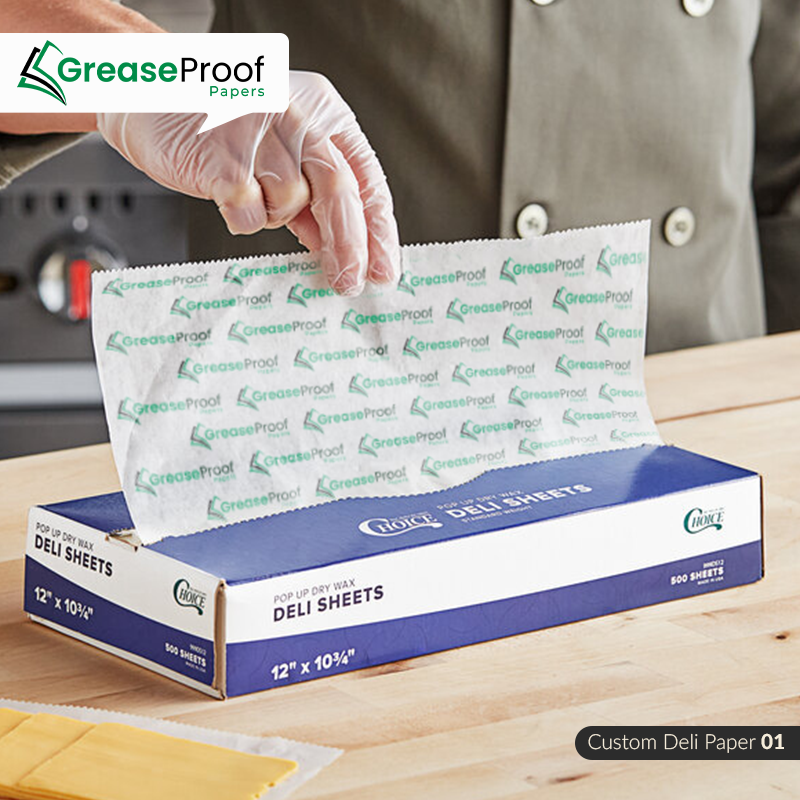
- Deli items
Print Quality
One major commercial advantage of greaseproof paper is its superior printability. On the other hand, parchment paper has slightly challenging printability due to the presence of silicone coatings. But both teh papers can be printed with:
- Logos
- Brand colors
- Promotional graphics
- Social media handles
- QR codes
- Seasonal campaigns
Can I Use Greaseproof Paper Instead Of Parchment?
Packaging cost affects every food business. Although parchment paper offers higher heat resistance, that additional performance is unnecessary for many food-service applications. So when you do not need a high-heat application, it is better to select grease paper that generally provides:
- Lower material cost
- Better printing flexibility
- Easier converting
- Improved branding value
- Lower packaging expenses for takeaway businesses
Restaurants have to wrap thousands of burgers each week, so they go with greaseproof paper. This is because it delivers superior performance of grease resistance without the need for five specific properties that parchment has. To choose the right paper, consider these questions before placing an order:
- Will the paper be used for cooking or only for packaging?
- Does the food contain high levels of oil?
- Is custom printing required?
- Will the food be delivered?
- What sheet size is needed?
- What GSM provides the required strength?
- Are sustainability certifications important?
- What production volume is required?
As you know, what greaseproof paper is used for, and where you have to use parchment, you will automatically get your answer. Answering these questions helps identify the most appropriate material for your operation. Below are some of the questions that we are commonly asked. You can read them and get an idea of a suitable option for you:
Is parchment paper the same as baking paper?
Yes! Parchment and baking paper are the same and refer to each other alternatively.
Can I bake with greaseproof paper?
Some of the specific grades of the grease paper are heat-resistant. However, a standard grease resistance sheet is generally manufactured for packaging only and not for prolonged oven use. So always check what your manufacturer recommends.
Why do burger restaurants use greaseproof paper?
This is because this paper resists grease stains, improves presentation, supports branding, and makes burgers easy to handle. Above all, it is more cost-effective than parchment paper.
Does parchment paper absorb grease?
No! The silicone coating on parchment makes it extremely resistant to oils and prevents the food from sticking to its surface. That is why it is used for baking,
Which Paper Is Better for Burgers?
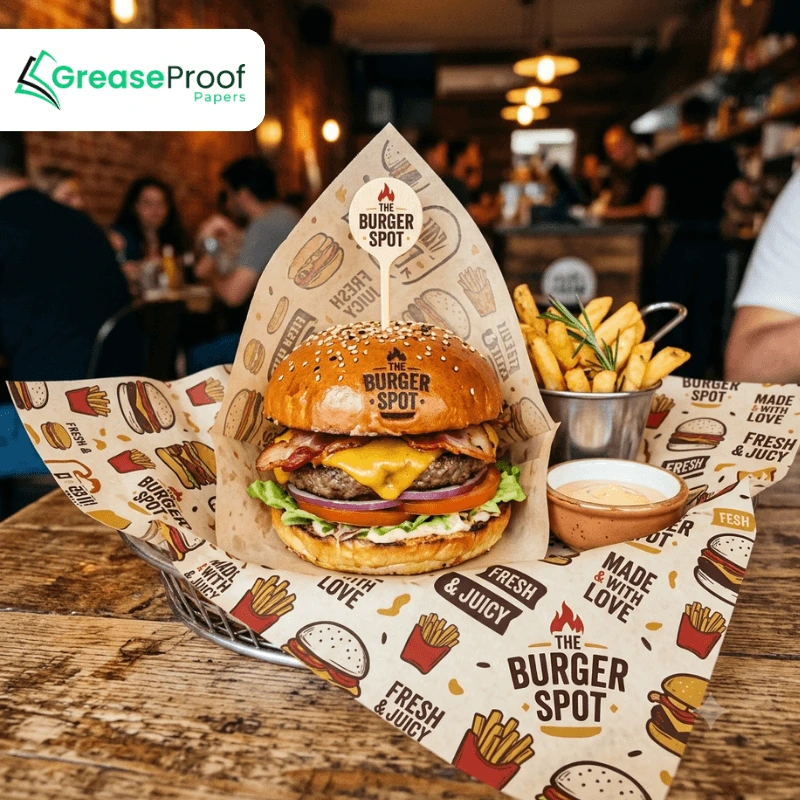
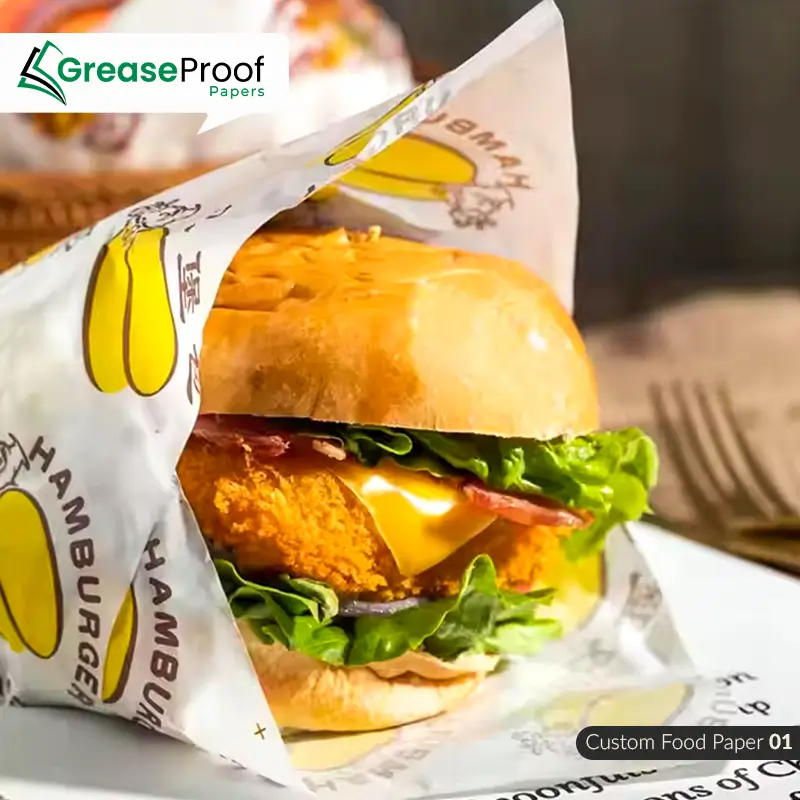
For burgers, greaseproof paper is the preferred packaging material. A quality greaseproof sheet helps contain these oils while maintaining an attractive appearance. Fresh burgers naturally release:
- Beef fat
- Cheese oils
- Sauces
- Butter
- Cooking juices
For burger restaurants, packaging is often one of the first physical touchpoints with customers. Clean and branded wrapping enhances perceived quality before the first bite. The customer can benefit by:
- Cleaner hands
- Easier handling
- Better presentation
- Reduced leakage
- Improved eating experience
Which Paper Is Better for Sandwiches?
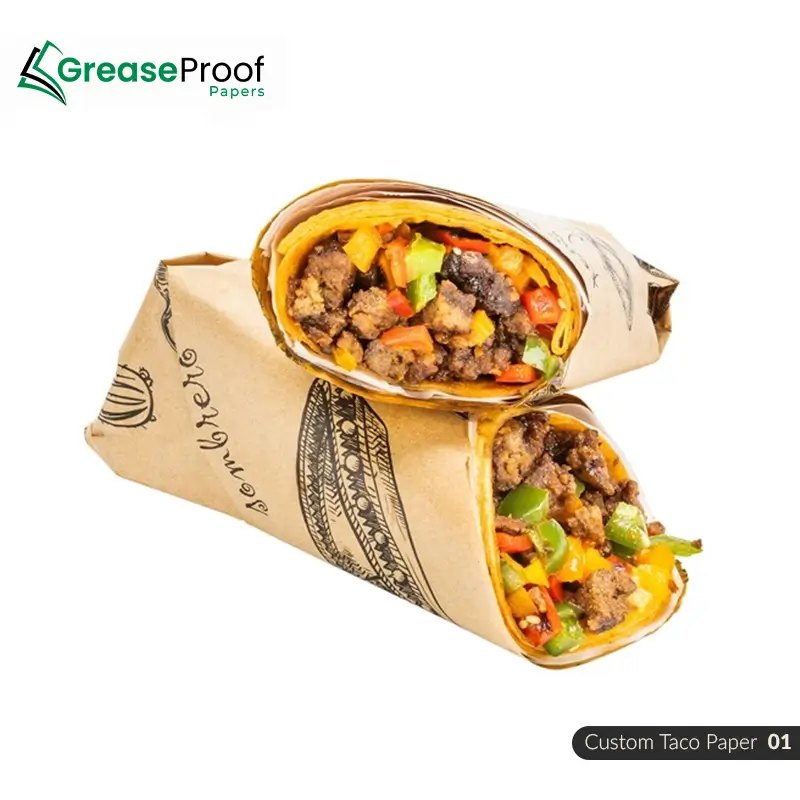
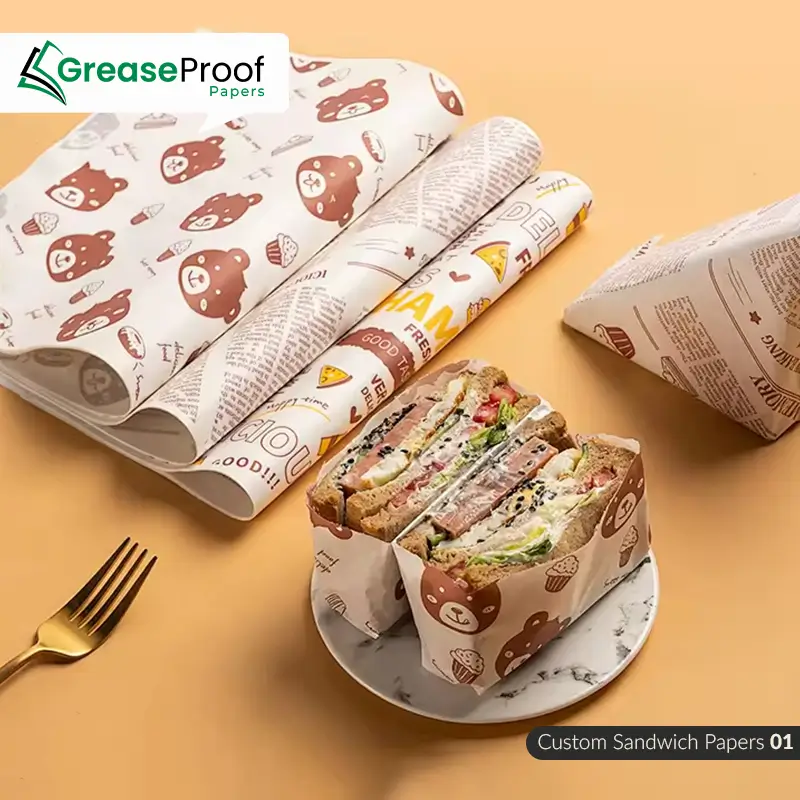
Greaseproof paper is widely used for sandwiches because it offers the right balance of grease resistance and flexibility. The paper folds neatly, it is easy to print, and it maintains product appearance during takeaway and delivery. This paper works particularly well for:
- Club sandwiches
- Paninis
- Wraps
- Breakfast sandwiches
- Deli sandwiches
- Grilled sandwiches
Which Paper Is Better for Bakeries?
In greaseproof paper vs parchment paper for baking, the latter is the best option. But the answer also depends on the product. You can choose parchment paper for:
- Baking trays
- Cookies
- Cakes
- Bread
- Pastries during baking
Many bakeries use both of them in the different stages of production and wrapping. You can use greaseproof paper for:
- Display wrapping
- Bakery takeaway
- Cookie packaging
- Donut wrapping
- Pastry presentation
Food Safety Considerations
Food packaging should always comply with the standards set by food regulatory authorities. A reliable packaging manufacturer produces paper that meets direct food contact standards. If your destination market is in the USA, then make sure that the packaging you select is FDA-compliant. So when you are evaluating the suppliers, ask about the following:
- Food-grade certification
- Migration testing
- Ink safety for printed papers
- Traceability
- Manufacturing quality systems
Below we have given a quick comparison table so you can compare greaseproof paper vs parchment paper vs wax paper:
| Feature | Greaseproof Paper | Parchment Paper | Wax Paper |
|---|---|---|---|
| Coating | None (Treated) | Silicone-Coated | Wax-Coated |
| Non-Stick | Moderate | Excellent | Excellent |
| Heat Resistant | Moderate | High | No |
| Oven Safe | Sometimes (Check Label) | Yes | No |
| Grease Resistant | Yes | Yes | Yes |
| Moisture Resistant | Moderate | Yes | Yes |
| Best Use | Wrapping Greasy Foods | Baking and Roasting | Food Wrapping and Storage |
Final Thoughts
Although greaseproof paper and parchment paper may appear similar, they are designed for different purposes. Greaseproof paper excels in food packaging, grease resistance, presentation, and branding. Parchment paper is specifically engineered for high-temperature baking and non-stick cooking applications. If you are worried about where to buy greaseproof paper and parchment paper, then you have landed at the best place. At Greaseproof Paper, we manufacture high-quality paper that is designed for your specific needs and is provided at wholesale rates. So contact us now or request a quotation.
Related Products